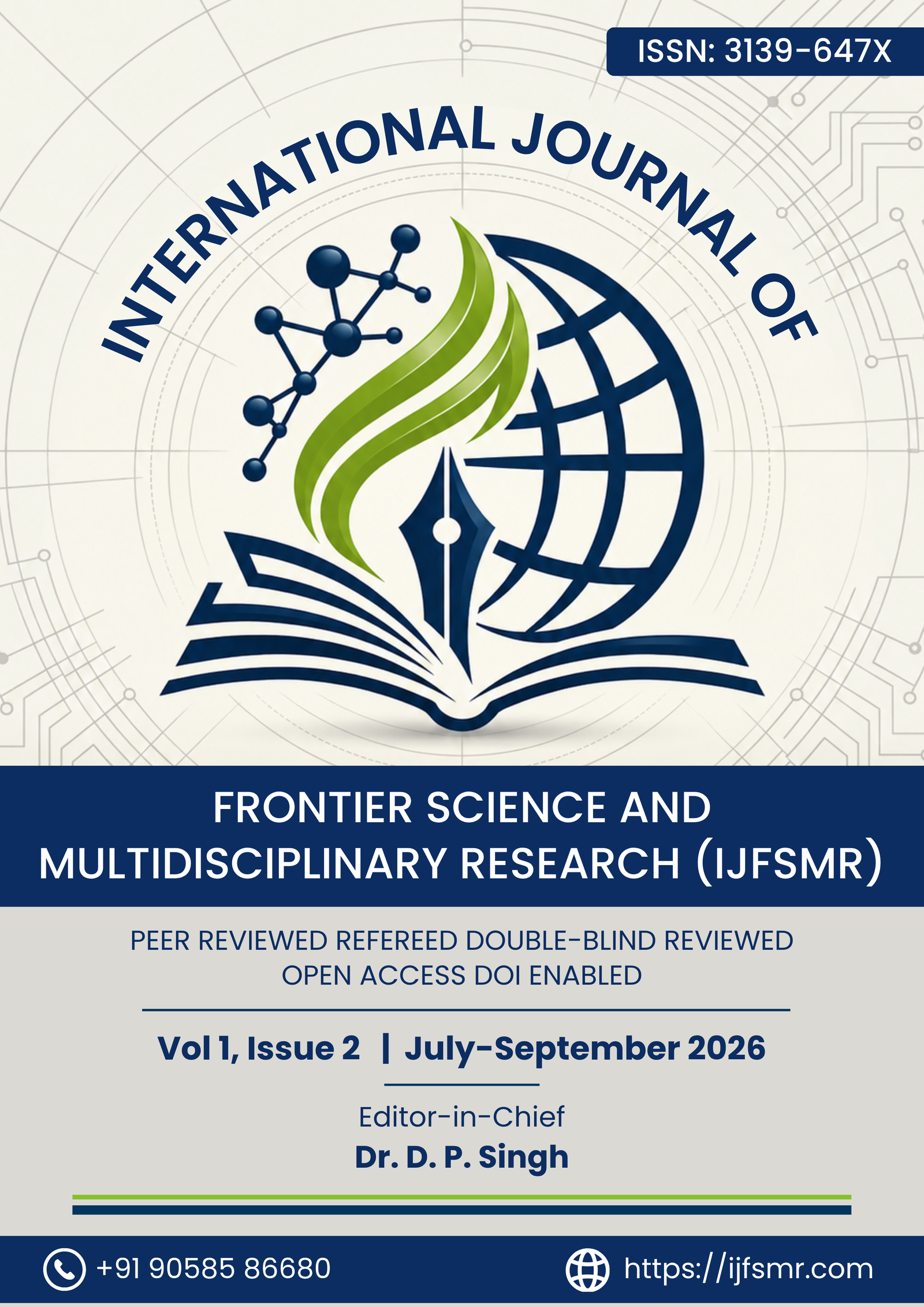
Sublethal Effects of Urban Air Pollution on Foraging Activity and Colony Health of the Asian Honey Bee (Apis Cerana) in Baghpat District, India
DOI:
https://doi.org/10.71371/ijfsmr.1210-14Keywords:
Apis cerana, air pollution, particulate matter, hemocyte density, foraging behavior, pollinator health, colony survival, Baghpat.Abstract
The study investigated the sublethal effects of air pollution on the Asian honey bee (Apis cerana) in Baghpat District, Uttar Pradesh, India. Honey bee colonies from an urban site characterized by high vehicular emissions and elevated particulate matter concentrations were compared with colonies from a less polluted rural area. A total of sixty worker bees were sampled, with thirty individuals collected from each location. Air quality was assessed using PM2.5 and PM10 measurements, while bee health was evaluated through hemocyte density analysis, foraging activity observations, and mortality assessment. The polluted site exhibited substantially higher particulate matter levels (PM2.5: 95 µg/m³, PM10: 180 µg/m³) compared with the rural site (PM2.5: 28 µg/m³, PM10: 60 µg/m³). Results demonstrated a significant decline in the mean hemocyte count of bees inhabiting polluted environments (4.8 × 10⁶ cells/mL) relative to those from the rural site (7.3 × 10⁶ cells/mL), indicating possible suppression of immune function. Foraging activity was also reduced, with urban bees performing an average of 58 trips per hour compared to 89 trips per hour in the rural population. Furthermore, mortality rates were markedly higher in the polluted area (14.5%) than in the rural environment (5.2%). Statistical analysis confirmed that these differences were significant (p < 0.05). The findings suggest that chronic exposure to urban air pollutants adversely affects the physiological condition, behavioral performance, and survival of Apis cerana. These impacts may ultimately reduce pollination efficiency and threaten colony sustainability. The study highlights the importance of improving air quality and implementing pollinator conservation strategies in rapidly urbanizing regions.
Downloads
Published
Issue
Section
License
Copyright (c) 2026 Author(s)

This work is licensed under a Creative Commons Attribution 4.0 International License.